Where do I see hope? For me, hope is that I realize I am important. CVT are the ones who helped me realize this.”
-Former CVT Uganda client
In 2009, CVT began working in Gulu, Uganda, a busy, vibrant city in the northern part of the country, a region that is home to the Acholi people. For all the lush beauty of this part of Uganda, it is also where the Lord’s Resistance Army (LRA) war brought violence and displacement to the people for decades. CVT sought a way to bring healing for Ugandan survivors as they were beginning to rebuild their individual lives as well as restore communities shattered by the war.
The CVT Uganda team has been enormously effective for many years providing healing to survivors, training psychosocial professionals in trauma-informed skills, and opening new pathways for survivors to pursue justice and help rebuild sustainable communities. Thousands of individual clients, along with many more thousands of family and community members, have had their lives positively impacted by the tireless work of the team. Sadly, today in the face of a drastically changing humanitarian and philanthropic environment, this long-running CVT program is coming to a close.
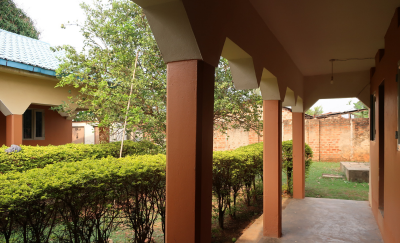

Gabriele Marini has served as field representative and psychotherapist in Uganda, promoting the development of the program and bringing care to clients. His initial efforts were in partnerships with Ugandan organizations which sought to provide support to internally displaced people as they returned home, as well as extending mental health care to people whose experiences of trauma were nearly unthinkable. With partners, Gabriele conducted training and co-therapy, which successfully helped clients but also helped build the clinical capacity of providers in Northern Uganda.
“I have deep respect and admiration for Gabriele Marini and for the successful, high quality services of our operations in Uganda,” said Neal Porter, director of international services. “Gabriele has been a true leader across a wide range of programming, and his creativity and commitment to finding new ways to support this community after the horrors of war was central to all the team’s success.”
Gabriele has been a true leader across a wide range of programming, and his creativity and commitment to finding new ways to support this community after the horrors of war was central to all the team’s success.”
-Neal Porter, director of international services
The work in Uganda expanded for years, including a significant initiative when the team began a partnership with Makerere University Department of Psychology in Kampala. This successful and very popular program brought mentoring to graduate students along with development and training for counselors from other humanitarian organizations, all focused on trauma rehabilitation skills and approaches.
Gabriele and the counselors provided direct services to clients, who were located far across the region. So while many came to CVT’s center in Gulu, the clinical teams traveled throughout the area to bring care to people where it was needed, often in remote villages. The team first held sensitizations – information sessions – in towns to share the word that CVT was bringing counseling for people who had bad experiences in the war. The word spread quickly.
One client (who chose the pseudonym Ayaa) said she attended one of these educational sessions and listened as the counselors spoke about how there was help for things like flashbacks, anxiety and depression. “At that time, I had a lot of worries and nightmares,” Ayaa said. “I realized that what CVT was talking about was what I went through in the war.”
Thousands of survivors heard CVT’s message and came for care. Over the years, clients have repeatedly told CVT that after starting the 10-week cycle of sessions, they began to feel differently and started taking steps to rebuild their lives. Before the CVT sessions, “I thought there is no need for me. I’m worthless,” Ayaa said. “I should not continue living.” For her, completing the sessions was a way to feel supported while facing her past trauma. “CVT makes you feel important,” she said. “It helps you begin to see yourself as important.”
“I use the metaphor of CVT’s care being a bridge for clients to walk over the idea of ‘impossibility,’ and instead walk in the direction they have already started when they decided to look for help – they have begun giving themselves the idea of possibility,” Gabriele wrote in this article about his work. “By coming to CVT, they have already started to change their lives.”
The team’s approach has always focused on helping clients understand in a very personal way how trauma can impact them. Emily Hutchinson, vice president for global programs, recently attended an information session in which clinicians performed a play they had written about a woman experiencing violence in her home. “They invited attendees to reflect and comment on aspects of the play that resonated with them, and the participants had such heartfelt responses,” Emily said. “This really illustrated the team’s creative thinking, deep contextual knowledge, and commitment to meeting people where they are in their healing journey.”
Now I have hope for a future.”
-Former CVT Uganda client
“The impact of the CVT Uganda team on clients and communities has been widespread in Northern Uganda, and it has been powerful,” said Sonya Funna Evelyn, CVT president and CEO. “Clients I met when I visited were resilient and motivated for the next chapters in their lives. Their hope was an inspiration.”
The impact of the CVT Uganda team on clients and communities has been widespread in Northern Uganda, and it has been powerful.”
-Sonya Funna Evelyn, president and CEO
The context in Gulu, where Ugandans had been displaced within their own country, was unique to CVT’s programming; we typically serve refugees who’ve fled their home countries. These clients in North Uganda had been taken from their own villages, abducted by the LRA – many of them as children – and forced to become child soldiers and sex servants. In many cases, the LRA forced abductees to commit crimes, so when those people were later able to return to their villages, they experienced a dramatically changed social environment, one where they were frequently not welcomed back. Often they were considered spiritually cursed by crimes they were compelled to commit in the period of abduction.
For many, returning meant facing rejection, stigma, discrimination and lack of access to resources and education. Women faced increased challenges especially if they had children born from rape during their captivity. “The pain of being stigmatized is unbearable,” one client told us. “How are we supposed to move forward with our lives?” Children born during abduction likewise faced discrimination in many ways, including because their biological father was not known or reachable or because they had no clan belonging.
This reality was a key driver behind CVT’s move into ongoing transitional justice work in Northern Uganda in recent years. The team has focused on strengthening and facilitating a transition to durable peace through trauma-informed practices supporting clients and engaging in civil society contributions. These efforts focus on addressing post-war emergent conflicts and empowering survivors to participate in efforts for justice, healing and reconciliation.
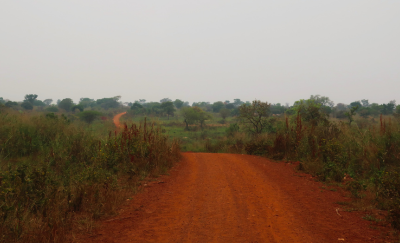
The team’s deep experience helping survivors rebuild their lives through mental health and psychosocial support has been an important foundation for moving into justice work. “At the beginning of therapy, rarely do survivors have in mind to become agents of social system change; rather, they are struggling with trauma symptoms, afraid to associate with other members of the community. They’re desperately trying to survive and to get something good from life,” said Gabriele Marini. “In trying to bring sense to their existential suffering experience, often they internalize their experience of neglect from the world and blame themselves. At the same time, they feel internally that what happened to them is wrong.”
Gabriele noted that after appropriate steps of recovery when symptoms decrease, when clients feel progress with internal changes and have positive relational experiences in groups, they gain the courage that comes from being legitimate members of their communities. “At this point,” Gabriele said, “some of them can be become powerful social agents of change if given the opportunity, as we did in our program.”
This transition for clients has been central to the success of CVT’s program in Uganda. “This team has been tireless in their work with clients who seek justice,” Neal Porter said. “For people who have been through unspeakable trauma, being thoughtfully guided in their pursuit of justice brings results and change but it also provides healing.”
And so it is with sadness that this program ends after so many years. Yet, the hard work and unique skills of the clinicians and so many team members have had a lasting impact far across the region. “Although CVT’s work in Uganda will close, it leaves a legacy of healing, justice and hope,” said Sonya Funna Evelyn.
After sessions, I let go of the hurt I have because I realize this is not my future. This is not my life.”
-Former CVT Uganda client